What We've Learned
People tell us all the time they could never own an electric vehicle. Too much range anxiety. Too much waiting at chargers. Too complicated.
We used to understand that concern. We don't anymore.
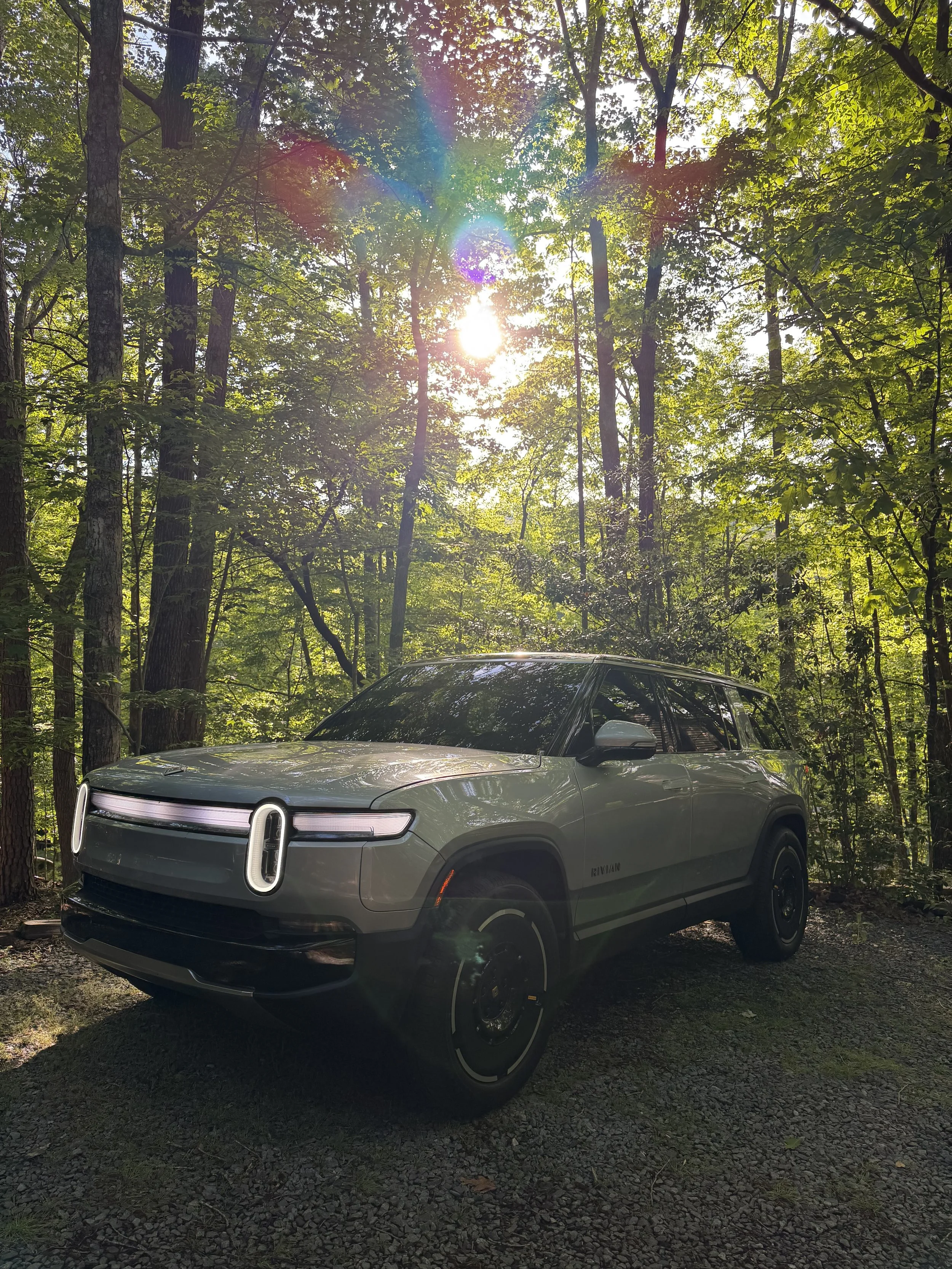
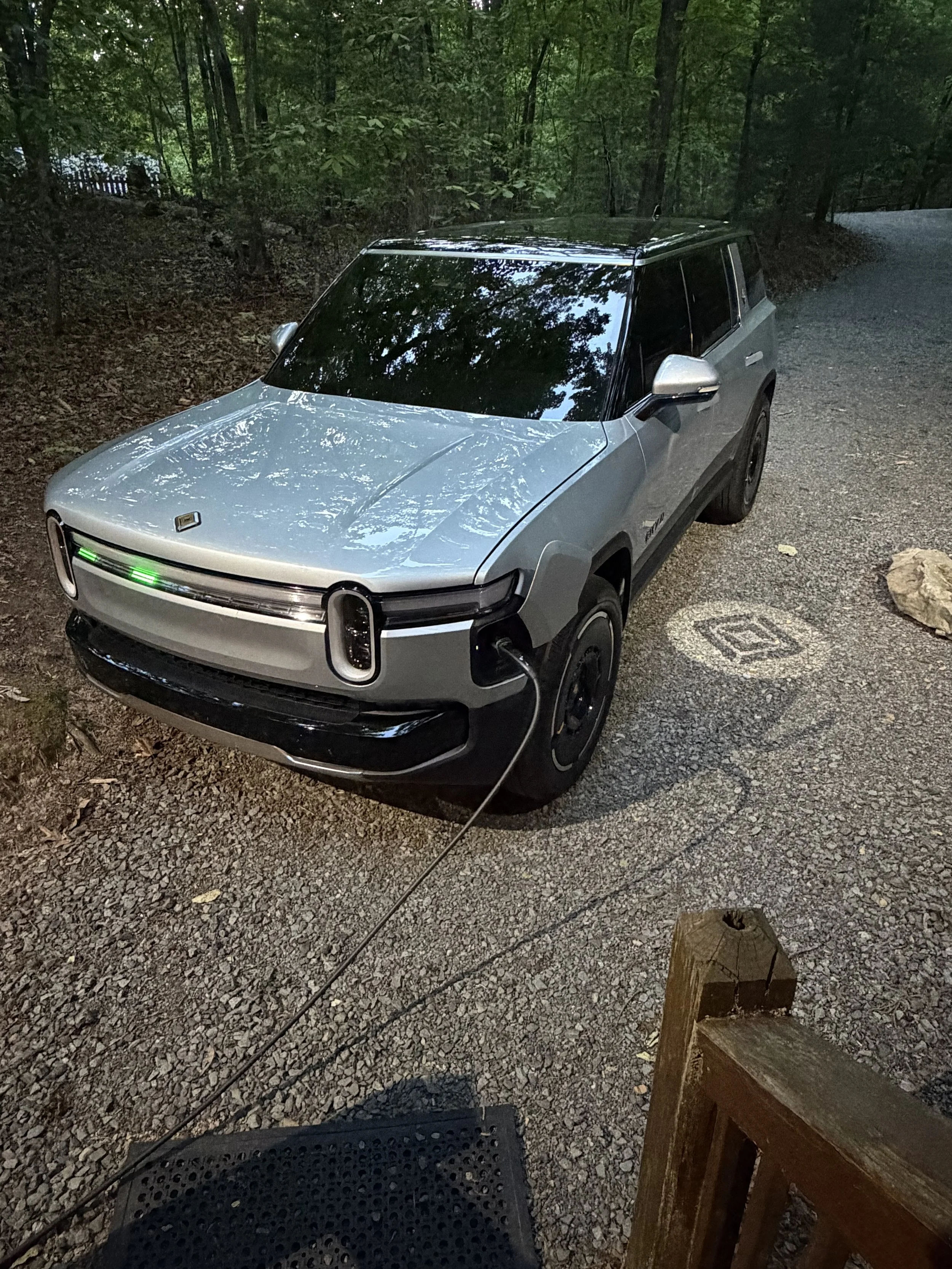
We have a Rivian R1S Dual Standard — 22-inch range wheels, about a year and a half of ownership — and we've road tripped it from Orlando to Blue Ridge, Georgia with two Boston Terriers, three charging stops, a broken Airbnb charger, a backup plan that worked, and zero moments where we wished we were in a gas car.
This is what we've actually learned. The charging networks worth using, the dog setup that makes long drives manageable, what Pet Mode is and why it matters, and the honest parts nobody puts in a press review.
This post contains affiliate links. If you purchase something through one of our links we may earn a small commission — at no extra cost to you. We only link things we actually use and believe in.
The Vehicle
Rivian R1S Dual Standard. 22-inch range wheels.
EPA range is around 270 miles. Real-world highway range at 75-80 mph runs closer to 200-240 miles depending on conditions, load, and elevation. On the Blue Ridge drive — 540 miles up I-75 through Georgia — we made it work comfortably with three planned stops.
The R1S was built for exactly this kind of use. The space is real. The ride quality is real. The ground clearance handled dirt roads, rocky mountain back roads, and Aska Road in Blue Ridge without hesitation. It doesn't feel like a compromise vehicle that also happens to be electric. It feels like the right tool for the kind of trips we want to take.
Before we had done a long road trip, our furthest regular drives were Orlando to Green Cove Springs, Orlando to St. Petersburg, Orlando to Sarasota, and once to Miami. The Blue Ridge trip was the first time we pushed it for a full day of driving. It delivered.
Charging: The Real Conversation
This is the section most EV road trip guides get wrong because they write about charging in the abstract. Here's what it actually looks like.
How We Plan Before We Leave
We charge to 100% at home the night before any road trip. We have a Tesla universal charger in our garage, which makes overnight charging easy. Steven plans the charging stops in advance using the Rivian app — selecting specific stations, saving the route, and building a plan we can just execute on the day without making decisions while driving.
That pre-planning matters more than most people realize. On the day of the trip, everything is already loaded. You plug in the destination, the car knows where to stop, and the charging stations you chose are queued. It removes the anxiety because the decisions are already made.
The Ionna Network
The best charging experience we've had. Peaked at 212 kW and held it. Priced at $0.39 per kWh. The station we used had a solid grass area nearby for the dogs, which made the stop genuinely useful rather than just standing in a parking lot.
The other thing about Ionna that matters: it's plug-and-play with the Rivian. No separate app. No account to set up at the charger. You plug in, walk away, and get billed directly. Same experience as Tesla Superchargers. That seamlessness is underrated when you're managing two dogs and coffee and a bathroom stop simultaneously.
The honest caveat: Ionna is newer. They're not everywhere yet. Build your route around them when you can, but have a backup network identified for stretches where they don't appear.
Tesla Superchargers
Tesla's infrastructure is still the most developed charging network out there. They've had years of runway and it shows. On the Blue Ridge trip we used Tesla twice, and Steven specifically sought out V4 Superchargers using PlugShare.
The reason: the older Tesla Supercharger stations have shorter cables that create real awkwardness when you're in a larger vehicle and trying not to block adjacent stalls. The V4 stations have longer cables, faster speeds — we hit 212 kW peak there too — and a setup that works properly for bigger vehicles. If you're a Rivian owner using the Tesla network, filter for V4 on PlugShare before you commit to a stop.
Rivian owners can use Tesla Superchargers with a NACS DC Adapter. Worth having one in the frunk before any long trip.
Mercedes-Benz Chargers at Buccee's
This is the underrated one. The Buccee's we stopped at had Mercedes-Benz fast chargers with a large grassy area right next to them — dog bags, a proper dog station, room to walk. It was one of the cleanest charging stops of the trip. We use these specifically because we don't want to take up two spaces at a Tesla station in a larger vehicle. They're fast, the location is convenient, and the infrastructure at Buccee's makes the stop genuinely comfortable.
Blue Ridge Specifically
Blue Ridge does not have a supercharger. The nearest fast charger is a ChargePoint station in East Ellijay — about 20 minutes from Blue Ridge proper. We used it when the cabin charger had an issue on our first night. It peaked at 80 kW, which is enough for a top-up but not as fast a a Tesla super charger or Ionna. Plan your charging around the drive, not the destination.
If you're staying at an Airbnb in the Blue Ridge area with a Level 2 charger, confirm it's working before you arrive and identify East Ellijay ChargePoint as your backup. Our host Marc at Misty Lake Getaway handled our charger issue extremely well — had an electrician out within a day — but you want to know your options regardless.
One thing worth saying about Blue Ridge and EV infrastructure: a Tesla Supercharger on the main street of Blue Ridge would be wrong for that town. Part of what makes Blue Ridge work is that it hasn't been over-developed. The slightly sparse EV infrastructure is consistent with the vibe. It just requires a little more planning.
PlugShare — The App Worth Having
Not the most beautiful app. Completely worth downloading. PlugShare has real-time data on charger availability, user check-ins confirming stations are working, speed data, and the ability to filter by connector type. The Rivian app has improved significantly and does well for basic route planning, but PlugShare is the one to cross-reference when you're making specific decisions about which station to stop at.
Steven is also a member of the Rivian Electric Vehicles Discussion group on Facebook — 123,000 members sharing real-world charging data, trip reports, and troubleshooting. If you own a Rivian and you're planning road trips, that group is a useful resource.
One More Thing About Charging Stops
People say they could never own an EV because they don't want to wait at chargers. Here's what those stops actually look like on a road trip:
Pull in. Plug in. Walk the dogs. Use the bathroom. Get food. Eat the food. The car is ready before you are.
We had multiple stops on the Blue Ridge drive where we finished everything we needed to do and the car still had a few minutes left. The charging stops forced us to actually stop — walk around, breathe, let the dogs move — in a way that straight-through gas car driving doesn't. We came back to the car rested every time. That's not a compromise. That's a better way to drive.
The Dogs
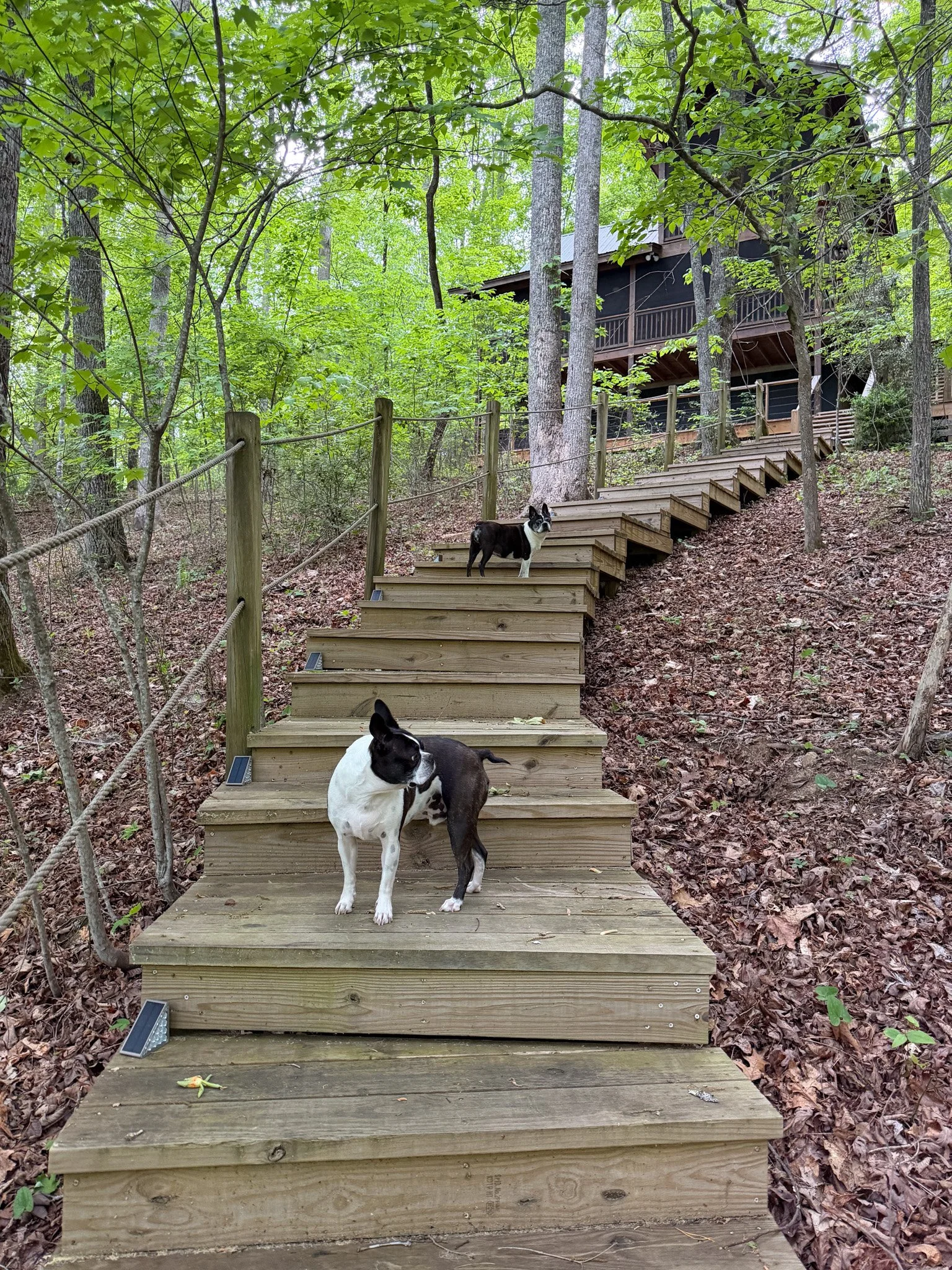
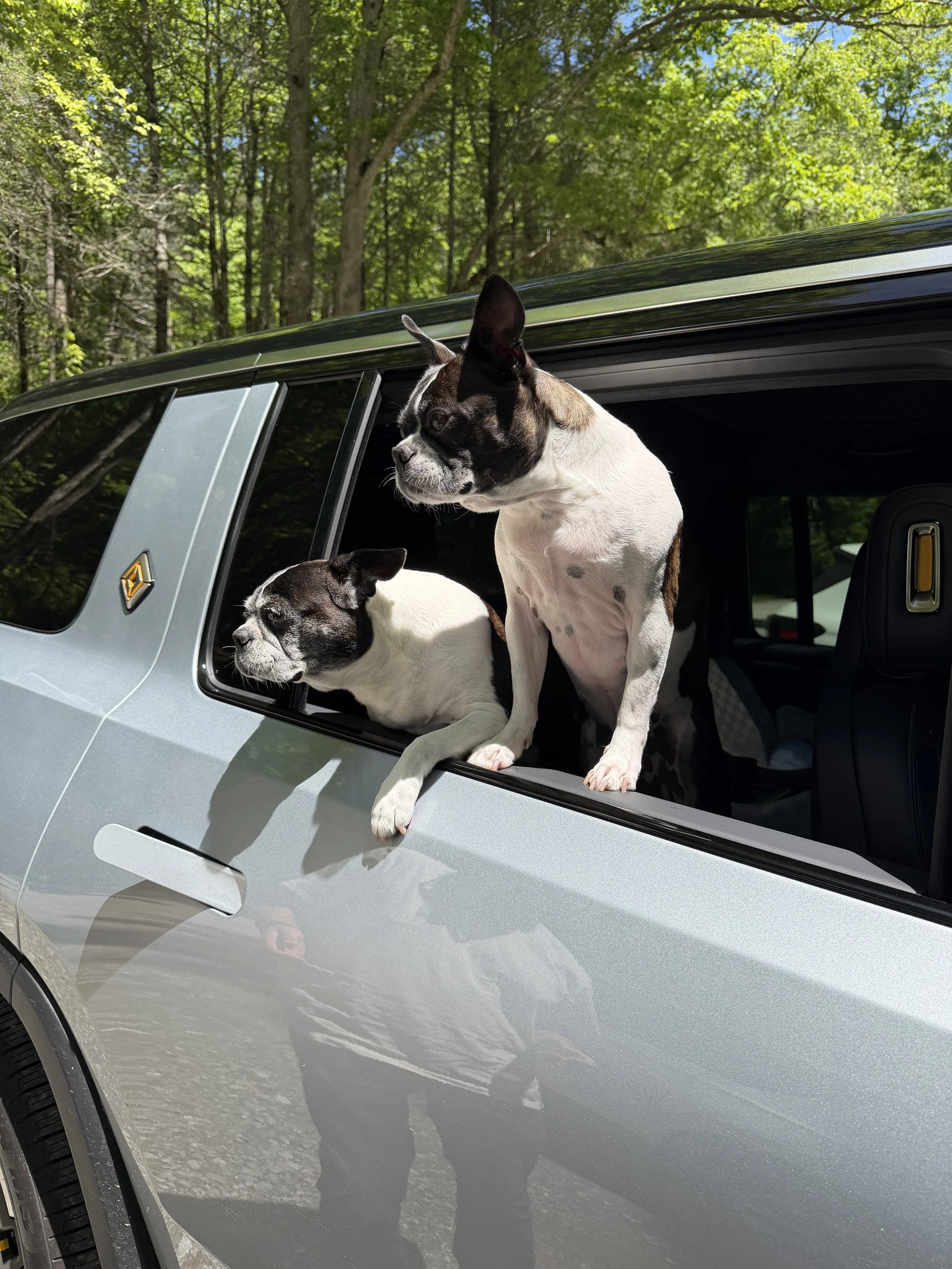
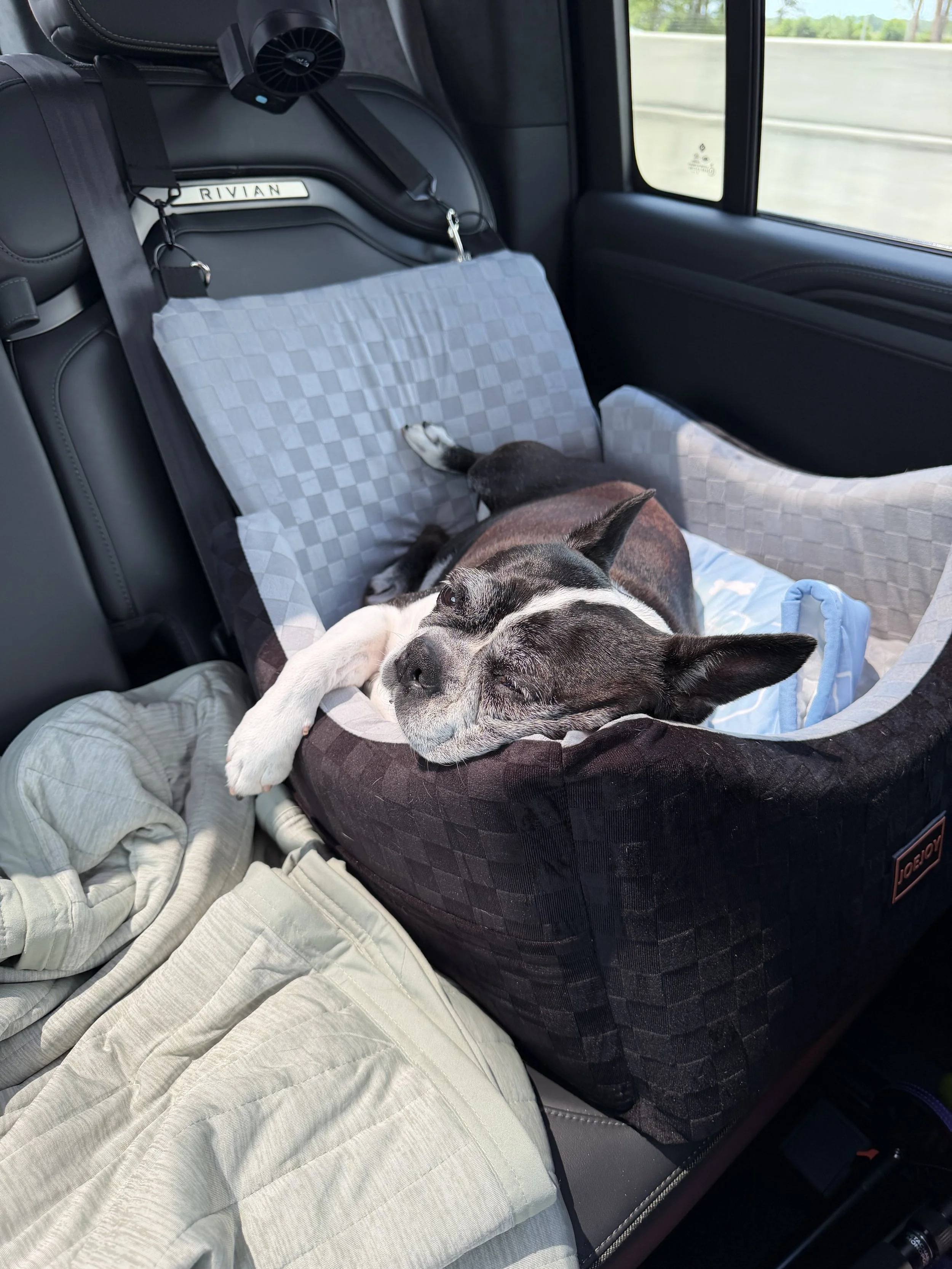
Ollie is younger. High energy. Loves the car from the moment the door opens. Lucy is 11. She gets warm faster, she's more particular about comfort, and she has been known to have opinions about the journey. But here's the thing about Lucy: the car has always been her happy place. If it were up to her, she would live on the open road. She settles into a long drive faster than Ollie does.
Different dogs. Different needs. The Rivian handles both.
Where They Ride
Back seat in their own matching dog car beds. We typically will throw a small blanket in them too. It makes it easy to keep the beds clean but also protects the interior while keeping them comfortable.
Keeping Lucy Cool
Lucy runs warm. On any drive over an hour, she needs active cooling or she gets uncomfortable. Our setup:
A cooling mat in her bed in the back seat. A small portable fan clipped to the headrest, aimed directly at her. Both of these make a real difference and she's visibly more comfortable for the whole drive.
Ollie doesn't need the fan. He would probably complain if he did.
Pet Mode
Pet Mode is one of the best features on any vehicle we've used. You activate it before leaving the car, it keeps the climate control running at the set temperature, and it displays a message on the screen visible through the window: the car is on, the dogs are fine, the temperature is maintained.
We use it at every charging stop when it's warm outside. Walk away, handle what we need to handle, come back to two dogs who have barely noticed we were gone. Lucy and Ollie just lie down. They're used to it now.
For anyone who has ever felt guilty leaving dogs in a parked car in the summer — Pet Mode solves this completely. It's not a workaround. It works.
What We Pack for the Dogs
For a multi-day road trip:
Their regular food portioned into a sealed container
Travel bowls for water and food at stops
We love this dog travel bag and typically use this to carry everything
Cooling mat for Lucy
Portable headrest fan for Lucy
Their car beds and a few blankets from home — familiar smell matters, especially the first night somewhere new
One toy each
Paw wipes for after trails and dirt roads
Jeep Wagon (this has been a life changing investment for us to take them more places easily) if we know we will be doing a lot of walking/ exploring
The frunk hold all of it without touching the main cabin space. That's the other thing the R1S does well for dog travel — there's genuine room for the dogs and all their gear without the vehicle feeling packed.
Rest Stops
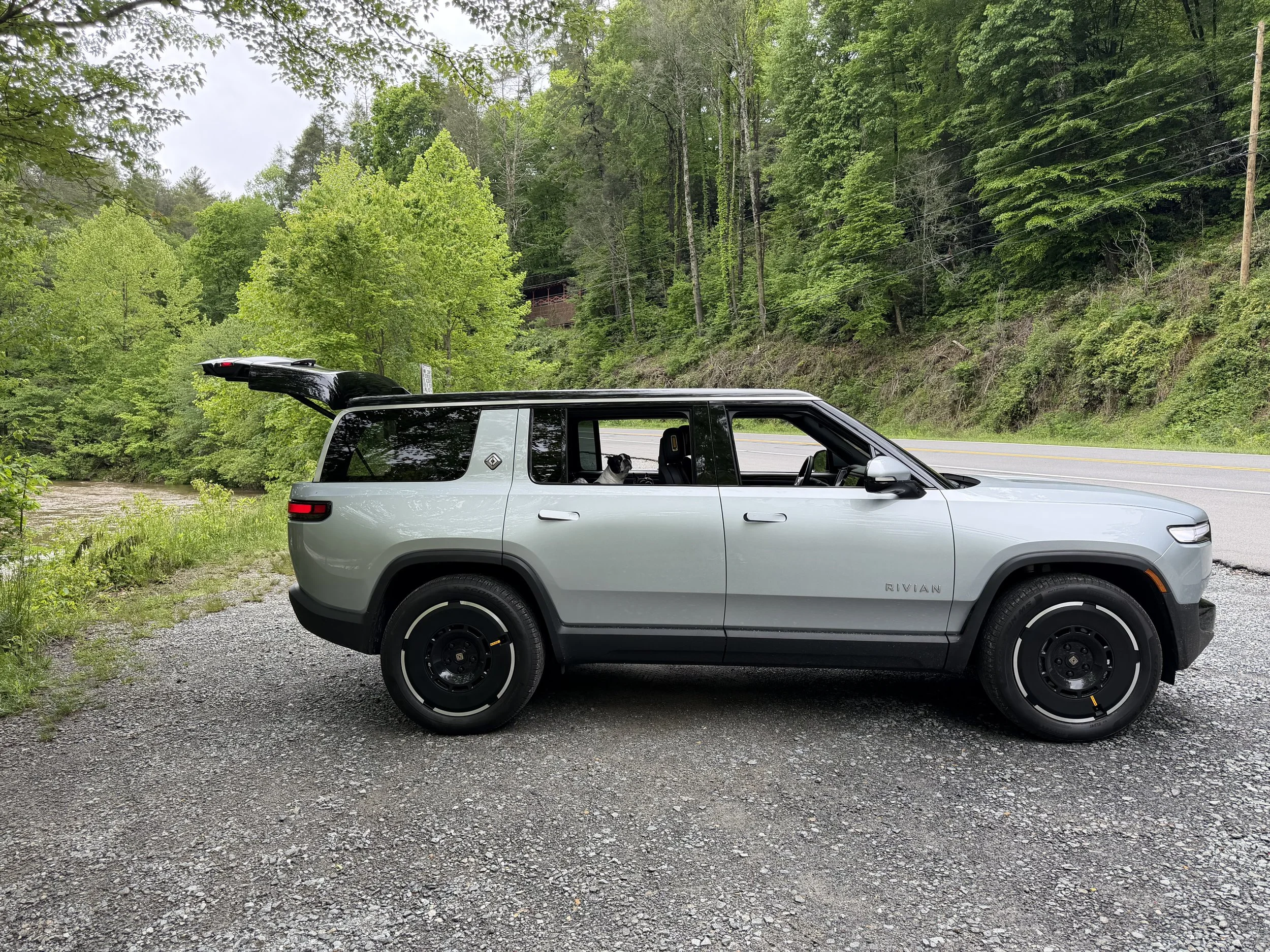
We stop every two to two and a half hours on a long drive — partially because Nikki drinks a lot of coffee and partially because the dogs need to move. On the Blue Ridge drive, the longest we went before a planned stop was three hours and fifteen minutes, and that was a stretch.
We look for a grassy area near the charger rather than just a parking lot. Most Ionna stations had decent space nearby. The Buccee's stop had a proper dog station with bags. With a little pre-planning on PlugShare, you can identify which charging stops have the most comfortable setups for dogs before you leave home.
The Honest Take
What's genuinely great about the Rivian for road trips:
The space. You don't feel like you're making a compromise to fit dogs and gear and luggage. The ride quality is smooth in a way that makes long highway miles easy with the air suspension. Pet Mode changes what it means to stop somewhere. The AWD and ground clearance mean a mountain back road or a dirt road to a trailhead is just a road. And the charging stops, when planned well, turn into the best part of the drive — actual breaks where you move and eat and let the dogs breathe.
What's genuinely hard:
Charging infrastructure outside major corridors is still inconsistent. A broken charger at your Airbnb is a real problem if you haven't identified your backup. Rural areas can be sparse. You have to think ahead in a way that gas car drivers have never needed to. This is not a vehicle for people who hate planning.
But the infrastructure has improved dramatically over even the last two to five years. The networks are better. The speeds are faster. The apps are more reliable. Every road trip we do is easier than the one before it.
Would we do it again over a gas car?
Without hesitation.
There's also something about the EV community that feels different from just owning a car. The Rivian Facebook group, the conversations at charging stations, the people who pull up next to you at a supercharger and want to talk about where you're going — owning one of these vehicles turns into a shared experience in a way that a gas car doesn't.
Field Notes
Vehicle: Rivian R1S Dual Standard, 22-inch range wheels
Real-world highway range: 200-240 miles at 75-80 mph
Blue Ridge trip: 540 miles, approximately 8 hours, I-75 north through Georgia
Charging stops, Orlando to Blue Ridge: 3 stops
Preferred networks: Ionna, Tesla V4 Superchargers, Mercedes-Benz at Buccee's
Charging apps we use: PlugShare for planning, Rivian app for in-car navigation
Charging in Blue Ridge: ChargePoint in East Ellijay, 80 kW peak. No superchargers in Blue Ridge proper.
Dog setup: Dog car beds, cooling mat, headrest fan, Pet Mode at all warm-weather stops
Dogs: Ollie (younger, high energy) and Lucy (11 years old, gets warm, loves the road)
Quick Answers
Is the Rivian R1S good for road trips with dogs?
Yes. The space is genuine — you can fold the rear seats flat for a proper sleeping surface, the frunk holds all dog gear without touching the main cabin, and Pet Mode means you can leave dogs in a climate-controlled car at every stop. We brought two Boston Terriers with all their gear on an 8-hour trip and never felt cramped.
Can you do a long road trip in a Rivian R1S Dual Standard?
Yes. Real-world range of 200-240 miles at highway speed means you're stopping every two to two-three hours, which is about the right interval for a comfortable drive anyway. Plan your charging stops using the Rivian app before you leave, identify your preferred networks, and the trip runs smoothly. We drove Orlando to Blue Ridge, Georgia — 540 miles — without any real stress.
What charging network is best for Rivian in the Southeast?
Tesla still has the most developed infrastructure overall. For Rivian specifically, Ionna has been the best experience — plug-and-play billing, fast speeds, reliable stations. Mercedes-Benz chargers at Buccee's locations are also consistently good and usually less crowded. Use PlugShare to cross-reference all of them before committing to a stop.
How do you keep dogs cool in a Rivian at charging stops?
Pet Mode. It keeps the AC running at your set temperature and displays a message on the screen showing the cabin temperature and that the car is occupied. We also use a cooling mat and a headrest fan for Lucy specifically — she runs warm and needs active cooling on any drive over an hour. The combination means she's comfortable for the full duration.
Is there range anxiety in a Rivian R1S Dual Standard?
Less than you'd expect with planning. The Rivian app plans charging stops automatically when you enter a destination, the real-time charger data has improved significantly, and the community resources — PlugShare, the Rivian Facebook group — fill in any gaps. We carry the Rivian mobile charger in the frunk for genuine emergencies, but we've never needed it. Plan the first trip carefully. By the second trip, the process feels normal.
What's the EV charging situation in Blue Ridge, Georgia?
Limited. No superchargers in Blue Ridge itself. The nearest fast charger is a ChargePoint station in East Ellijay — about 20 minutes away, 80 kW peak speed. If your accommodation has a Level 2 charger, plan overnight charging as your primary strategy and identify East Ellijay ChargePoint as the backup before you arrive. Download PlugShare before you leave home.
What's the biggest mistake people make on EV road trips with dogs?
Not using the charging stops as dog stops. Those 15-30 minutes at a charger are exactly the right amount of time to walk the dogs, use the bathroom, grab food, and get back on the road. When you plan for it, the stops become the rhythm of the drive. When you don't plan for it, they feel like interruptions. The difference is entirely in the mindset and the route planning.
The Gear List
Everything linked below is what we actually use. Not sponsored — just what works.
For a full dog road trip packing list, see our Blue Ridge Field Notes post
One More Thing
We are not trying to convert anyone. An EV is not for everyone, and a Rivian specifically is a real financial decision that makes sense for some people and not others.
But the version of EV road tripping that people are afraid of — stuck at a charger, stranded in the middle of nowhere, anxious about range — hasn't been our experience. Our experience has been a vehicle with more space than we need, charging stops that work out to genuine breaks, two dogs who are more comfortable than they've ever been on a long drive, and a community of people who treat every road trip like a shared project.
The long way home is better when you're not in a rush to get there.
Clock out. Come with us. We'll take the long way home.